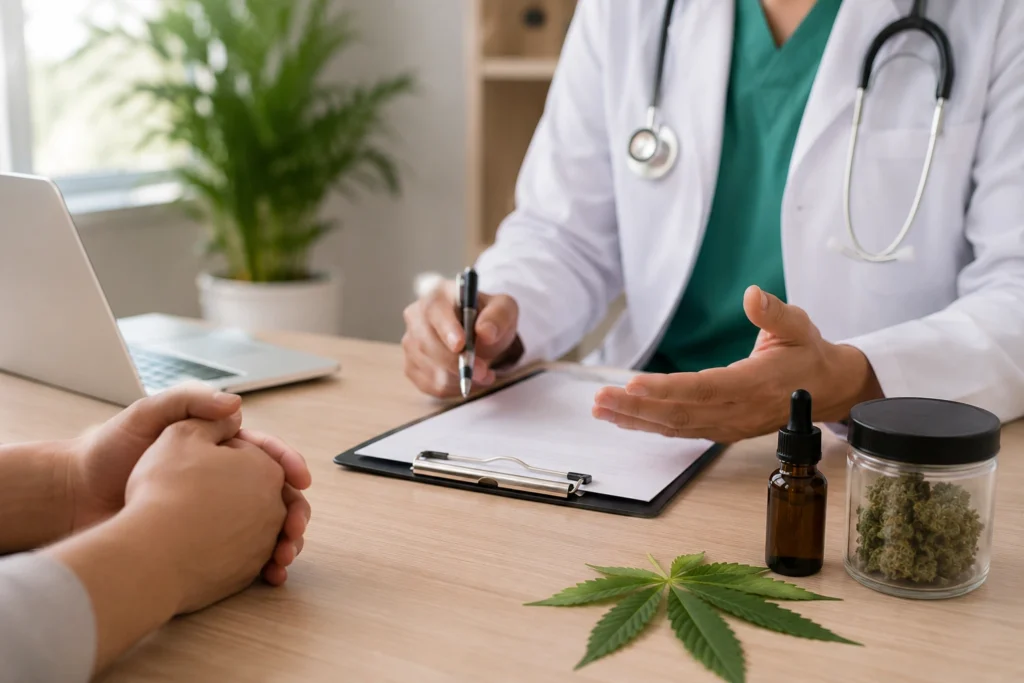
If you are considering medical cannabis, choosing the right doctor is one of the most important decisions you can make. A qualified cannabis doctor should do more than simply complete paperwork for a medical marijuana program. They should understand your health history, explain what medical cannabis can and cannot do, discuss potential risks, and help you make informed decisions within your state’s laws.
When considering how to choose the best cannabis doctor, focus on factors such as the doctor’s qualifications, experience, communication style, and understanding of medical cannabis. The best cannabis doctor for you is not necessarily the one with the lowest consultation fee or the fastest appointment. Instead, look for a licensed healthcare professional who follows state requirements, protects your privacy, and takes time to understand your individual situation.
Because cannabis laws and medical marijuana programs vary by state, the process can also look very different depending on where you live. Checking your state’s requirements before scheduling an appointment can help you choose a qualified doctor who can guide you through the process.
What Does a Cannabis Doctor Do?
A cannabis doctor is a licensed healthcare professional who evaluates patients who are interested in using medical cannabis under an applicable state program.
During an evaluation, the doctor may review your:
- Medical history
- Current symptoms and health concerns
- Previous or current treatments
- Medications and supplements
- Relevant medical records
- Potential risks associated with cannabis use
- Eligibility under your state’s medical cannabis rules
Depending on state law, the physician may certify or recommend you for the state’s medical cannabis program if you qualify.
It is worth understanding what this means. A medical cannabis evaluation is not necessarily the same thing as receiving a conventional prescription for cannabis. State medical marijuana systems have their own rules, and cannabis products available through those programs are not generally FDA-approved treatments for specific diseases. The FDA has approved certain cannabinoid-based prescription medicines, but it has not approved cannabis itself as a treatment for any disease or condition.
A responsible doctor should therefore avoid promising that cannabis will cure a condition or work the same way for everyone.
How to Choose the Best Cannabis Doctor?
Start by looking beyond the doctor’s marketing. A good cannabis physician should meet several basic standards.
1. Confirm the Doctor Is Properly Licensed
Before scheduling an appointment, verify that the healthcare professional is legally licensed to practice in your state.
State medical boards and health departments are usually the best places to confirm a physician’s license. This is especially important when using an online cannabis clinic, because a professional’s website alone should not be your only source of verification.
Check:
- The doctor’s full name
- Professional license status
- State of licensure
- Whether the license is active
- Any publicly available disciplinary information
You should also confirm that the provider is legally permitted to conduct medical cannabis evaluations under your state’s rules.
2. Look for Relevant Cannabis Experience
A physician does not necessarily need to work exclusively in medical cannabis to be useful. What matters is whether they understand cannabis, its potential benefits and risks, and the health issues relevant to you.
Ask whether the doctor has experience with patients who have concerns similar to yours.
For example, someone considering cannabis for chronic pain may want a physician who understands pain management. Someone taking several medications may benefit from a doctor who is comfortable reviewing possible drug interactions and safety concerns.
A doctor who simply processes certifications without discussing your health may not be the right fit.
3. Choose Someone Who Actually Listens
Your consultation should feel like a medical conversation, not a transaction.
A good cannabis doctor should give you an opportunity to explain:
- Why you are considering medical cannabis
- What symptoms are affecting you
- What treatments you have already tried
- What medications you currently take
- What concerns you have about cannabis
- What outcome you hope to achieve
You should also be able to ask questions without feeling rushed.
If a provider seems unwilling to discuss your medical history or immediately promises a specific result, consider that a warning sign.
4. Ask How the Doctor Handles Safety
Cannabis is not risk-free. Research has associated cannabis use with issues such as impaired coordination and reaction time, cannabis use disorder, cardiovascular effects, and other potential health concerns. Risk can vary according to factors such as age, frequency of use, THC concentration, and a person’s underlying health.
A responsible doctor should be willing to discuss these issues.
Depending on your circumstances, you may want to ask about:
- Possible side effects
- Drug interactions
- THC versus CBD
- Appropriate product types
- Potential impairment
- When cannabis should be avoided
- Whether follow-up care is recommended
The goal is not simply to find someone who says “yes.” It is to find someone who can help you make a safer, informed decision.
5. Understand the Certification Process Before Paying
Every state has its own medical cannabis rules. Eligibility requirements, physician certification procedures, patient registration, fees, possession limits, and renewal requirements can differ.
Before booking an appointment, find out:
- What the consultation includes
- Whether medical records are required
- Whether the doctor determines eligibility during the appointment
- What happens after certification
- Whether you must register with a state agency
- Whether the provider handles any part of the state application
- How renewals work
- What happens if you are not approved
Be cautious of websites that guarantee approval before a medical evaluation. A legitimate healthcare provider should make an independent clinical assessment rather than promise a predetermined outcome.
Is an Online Cannabis Doctor a Good Option?
For many patients, telemedicine can make medical cannabis evaluations more convenient. Depending on state law, eligible patients may be able to speak with a healthcare provider from home instead of traveling to a clinic.
Online appointments can be particularly useful for people who:
- Live far from a cannabis clinic
- Have transportation difficulties
- Have mobility limitations
- Have demanding work or family schedules
- Prefer a private consultation at home
However, online care is not automatically better than an in-person visit. The right option depends on your health needs and what your state permits.
When using telehealth, look for a provider that takes privacy seriously. The U.S. Department of Health and Human Services recommends appropriate privacy and security safeguards for telehealth, and patients should use a private setting and secure connection when discussing sensitive health information.
What Should You Look for in an Online Cannabis Clinic?
If you are searching for a cannabis doctor online, evaluate the clinic as carefully as you would evaluate an in-person practice.
1. A clear medical evaluation
The website should explain what happens during the consultation rather than simply advertising a medical marijuana card.
2. Transparent pricing
You should be able to understand the consultation cost before booking. Look for information about additional state fees, renewal costs, medical-record requirements, and other potential charges.
3. Real healthcare professionals
The clinic should clearly identify its medical providers and explain their qualifications.
4. Secure technology
Because medical cannabis consultations involve health information, the platform should have appropriate privacy and security measures.
5. Accessible support
There should be a reasonable way to contact the clinic if you have questions before or after your appointment.
6. State-specific information
A reputable provider should explain the rules applicable to your state instead of presenting medical marijuana certification as a one-size-fits-all process.
How Important Are Patient Reviews?
Reviews can provide useful insight, but they should not be your only deciding factor.
Look for patterns rather than focusing on one unusually positive or negative review.
Patients may comment on:
- How long the appointment took
- Whether the provider listened
- How clearly the process was explained
- Customer support
- Scheduling
- Follow-up communication
- Billing transparency
Remember that reviews describe individual experiences. They do not prove that a particular physician is medically appropriate for you.
It is also worth checking independent review platforms rather than relying exclusively on testimonials published by the clinic itself.
Questions to Ask a Cannabis Doctor
You do not need to arrive at your appointment with a long list of technical questions. A few practical ones can help you understand whether the doctor is a good fit.
Consider asking:
- Is medical cannabis appropriate for my situation?
- What potential benefits and risks should I consider?
- Could cannabis interact with any medications I take?
- What should I know about THC and CBD?
- What side effects should I watch for?
- Are there circumstances in which I should avoid cannabis?
- What does my state’s certification process involve?
- Will I need follow-up appointments?
- What should I do if I experience unwanted effects?
- What information should I bring to my evaluation?
A good doctor should be comfortable answering these questions in language you can understand.
What Information Should You Have Ready for Your Appointment?
Preparing beforehand can make your consultation more useful.
Depending on your state’s requirements and your provider’s process, you may need information such as:
- Government-issued identification
- Proof of state residency
- Medical records
- A list of current medications
- Relevant diagnoses or symptoms
- Previous treatment information
- Contact information for your existing healthcare providers
Don’t leave out important health information simply because you think it could affect your eligibility. Your doctor needs an accurate picture of your health to evaluate whether cannabis may be appropriate and to discuss potential safety concerns.
Red Flags When Choosing a Cannabis Doctor
Not every cannabis clinic offers the same level of care. Be cautious if you notice several of these warning signs:
1. Guaranteed approval
Medical decisions should involve an evaluation. A provider that guarantees certification before reviewing your circumstances deserves extra scrutiny.
2. No meaningful medical consultation
If you are asked for payment and then immediately sent a certification without meaningful interaction with a healthcare professional, consider looking elsewhere.
3. Unclear provider credentials
You should be able to determine who is evaluating you and whether that person is appropriately licensed.
4. Aggressive sales tactics
Be cautious when a clinic pressures you to purchase additional products or services that you do not understand.
5. Unrealistic medical promises
No responsible provider should promise that cannabis will cure a disease or produce the same results for every patient.
6. Hidden fees
Make sure you understand the total cost before submitting payment.
7. Poor privacy practices
Avoid sharing sensitive medical information through insecure channels or with a provider whose identity and credentials you cannot verify. HHS recommends using secure systems and taking reasonable steps to protect health information during telehealth appointments.
Medical Cannabis Is Not Right for Everyone
Finding a qualified cannabis doctor also means finding someone willing to tell you when cannabis may not be appropriate.
Research suggests that cannabis can have health risks, and some people may be more vulnerable than others. Cannabis can affect memory, attention, coordination, reaction time, and decision-making, while frequent use can increase the risk of cannabis use disorder.
CBD should not automatically be considered harmless either. The FDA notes that CBD can cause side effects and may interact with other medications.
This is one reason a proper medical evaluation matters. Your doctor should consider your overall health rather than treating cannabis as a universal solution.
What Happens After You Receive Medical Cannabis Certification?
Getting certified is only one part of the process.
Depending on your state, you may still need to complete a state registration or obtain a patient identification card before purchasing medical cannabis.
After that, your healthcare provider may recommend follow-up care or ask you to monitor how you respond to treatment.
Keep track of things such as:
- What product you use
- How much you use
- When you use it
- How you feel afterward
- Any unwanted effects
- Changes in your symptoms
Keeping a simple record can make future conversations with your healthcare provider more productive.
Do not change prescription medications or stop conventional treatment simply because you begin using cannabis unless the clinician managing that treatment advises you to do so.
How to Find the Best Cannabis Doctor for Your Needs
There is no single “best cannabis doctor” for every patient. The better question is: Which qualified doctor is the best fit for my health needs, state requirements, and preferences?
A useful approach is to compare providers based on these factors:
| What to Check | Why It Matters |
|---|---|
| State license | Helps confirm the provider is legally authorized to practice |
| Cannabis knowledge | Shows whether the doctor understands medical cannabis |
| Relevant experience | Can be valuable when you have a specific health concern |
| Communication | Makes it easier to discuss risks and expectations |
| Transparent pricing | Helps you avoid unexpected costs |
| Consultation quality | A meaningful evaluation is more useful than a paperwork-only process |
| Telehealth availability | Provides convenience where legally permitted |
| Privacy protections | Helps safeguard sensitive health information |
| Follow-up care | Gives you support beyond the initial certification |
| Patient feedback | Offers insight into other patients’ experiences |
Frequently Asked Questions
What makes a good cannabis doctor?
A good cannabis doctor should be appropriately licensed, knowledgeable about medical cannabis, familiar with relevant state requirements, willing to review your health history, and able to explain potential benefits and risks clearly.
Do cannabis doctors prescribe marijuana?
The terminology depends on the state. Medical marijuana programs generally involve a physician certification or recommendation rather than treating cannabis in the same way as an FDA-approved prescription medication. State laws determine what healthcare professionals can authorize and how patients access the program.
Can I see a cannabis doctor online?
In some states, medical cannabis evaluations can be completed through telemedicine. However, rules vary by state and can change. Always confirm the current requirements where you live.
Should I choose the cheapest cannabis doctor?
Price is one factor, but it should not be the main factor. A low-cost appointment may not provide the level of medical evaluation, communication, or follow-up that you need.
Compare the complete service rather than looking only at the advertised consultation price.
How do I verify a cannabis doctor’s license?
You can usually use your state’s medical licensing board or health department website to check a healthcare professional’s license. You can also ask the clinic for the provider’s full name and professional credentials.
What should I tell a cannabis doctor?
Be honest about your symptoms, medical history, current medications, previous treatments, cannabis use, and concerns. Accurate information helps the provider make a more informed assessment.
Is medical cannabis safe for everyone?
No. Cannabis can have side effects and potential risks, and those risks can differ between individuals. A healthcare professional can help you consider whether medical cannabis is appropriate for your circumstances.
Is CBD safer than THC?
CBD and THC have different effects, but “natural” does not automatically mean risk-free. CBD can cause side effects and interact with medications, while THC can affect coordination, cognition, and other aspects of brain function.
Final Thoughts
Choosing a cannabis doctor should be about more than getting approved for a medical marijuana program. The right provider should give you a genuine medical evaluation, explain what you can reasonably expect, discuss safety concerns, and help you understand the rules that apply in your state.
Before booking, verify the doctor’s credentials, compare the consultation process, check pricing, read patient feedback, and ask how the clinic handles privacy and follow-up care.
Most importantly, choose a provider who treats you like a patient rather than a transaction. A thoughtful medical cannabis evaluation can help you make a more informed decision about whether cannabis belongs in your healthcare plan.
